


How to Break In Leather Riding Boots Without Damaging Them
Learn how to break in leather riding boots gradually without damaging the leather, zips or fit, plus the shortcuts to avoid.
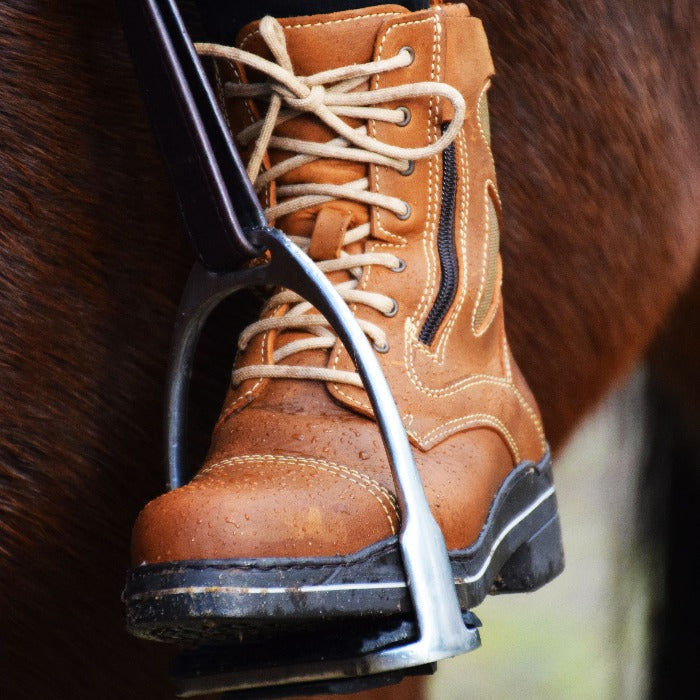
The safest way to break in leather riding boots is to start with a pair that already fits, then wear them indoors for short periods in your usual riding socks. Increase the time gradually and let normal walking flex the leather. Do not soak, heat, crush or force the boots: those shortcuts can distort the fit, dry the leather or damage zips and stitching.
Check the fit before you try to soften the leather
Breaking in helps good leather boots settle around your feet and ankles; it cannot correct the wrong size or shape. Before wearing them outdoors, check that your toes are not pressed against the front, your heel is reasonably secure and any zip closes without being forced. If pressure or movement makes you doubt the fit, stop and use our riding boot fit guide before continuing.
How should you break in leather riding boots?
- Wear your normal riding socks. Changing to unusually thick socks can make the boots feel tighter and may give you a misleading impression of the fit.
- Begin indoors for 20–30 minutes. Walk naturally on a clean floor and sit down a few times so the ankle can flex without the leather being folded or crushed.
- Increase the time gradually. If the fit still feels right, add a little more wear over the next few sessions rather than committing to a full day immediately.
- Adjust fastenings correctly. Set laces or straps for secure support, but do not overtighten them to force the leather into shape. The Kentucky Jodhpur Riding Boots, for example, have adjustable laces and a side zip, so the laces can be set for width, instep and ankle support before using the zip for entry.
- Move on to a short ride only when you are happy with the fit. Once boots have been worn outdoors, your return options may change, so check the current returns terms first.
What should new leather riding boots feel like?
New leather can feel firmer than it will after regular wear, especially around the ankle. It should still feel secure rather than painful. A little stiffness and even creasing where the ankle naturally bends can be normal; persistent pinching, numbness, toes touching the front or a zip under obvious strain are reasons to stop and reassess the size or style.
| Usually part of settling in | Stop and check the fit |
|---|---|
| Firm leather that flexes more easily with each short wear | Sharp or persistent pressure in one area |
| Light, even creasing at the natural ankle bend | Toes pressed against the front of the boot |
| A secure heel with a small amount of initial movement | Significant heel lift or the foot sliding inside |
| A zip that closes smoothly without force | A zip or elastic panel that is visibly strained |
Should you condition leather to speed up breaking in?
A suitable care product can help maintain leather, but it is not a substitute for correct fit or gradual wear. Check the instructions for your exact boot material first: products intended for smooth or waxed leather may change suede or crushed nubuck. Apply any approved product sparingly to clean, dry leather and keep it away from zips unless the label says otherwise. Our boot care guide explains how to match care to the material.
What should you never do to new leather riding boots?
- Do not soak the boots in water or wear them wet to mould them.
- Do not use a hairdryer, radiator, fire or other direct heat on the leather.
- Do not fold the shafts, stamp on the heels or force deep creases into the ankle.
- Do not apply household oils, creams or an unverified treatment.
- Do not ignore persistent pressure in the hope that the leather will stretch enough.
These methods can dry, stain or distort leather and may weaken adhesives, zips or stitching. Patience is slower, but it gives the boots the best chance to settle without damage.
Do long and short riding boots break in differently?
Jodhpur and short riding boots mainly need to settle around the foot and ankle. Long boots also flex at the ankle and may settle slightly in height as the leather creases naturally, so check calf and height measurements carefully before wearing them outdoors. Compare current options in our women's riding boots collection or browse the wider horse riding boots range.
Frequently asked questions
How long do leather riding boots take to break in?
There is no reliable single timescale. Leather type, construction, fit and how often you wear the boots all affect how quickly they settle. Use comfort and fit as your guide rather than trying to meet a fixed deadline.
Should I wet leather riding boots to break them in?
No. Soaking leather can change its shape, finish and structure and may affect other components. Break boots in gradually while they are dry.
Can leather conditioner make riding boots comfortable faster?
A compatible conditioner may help maintain suitable leather, but it cannot fix poor fit and should not be used simply to force stretching. Follow the boot and care-product instructions, and test cautiously if the finish may change.
Should new riding boots hurt at first?
No. Some firmness is normal, but pain, numbness or persistent rubbing is a sign to stop and reassess the fit. Breaking in should be a gradual settling process, not something you have to endure.
Need help choosing the right boots?
Our friendly team can help with fit, calf width, instep and sizing. Give us a call or drop into the showroom.